
Thinness, Conservatism And Fashion’s Silent Shift: Let’s Talk about Pretty Little Thing’s Rebrand

© Pretty Little Thing
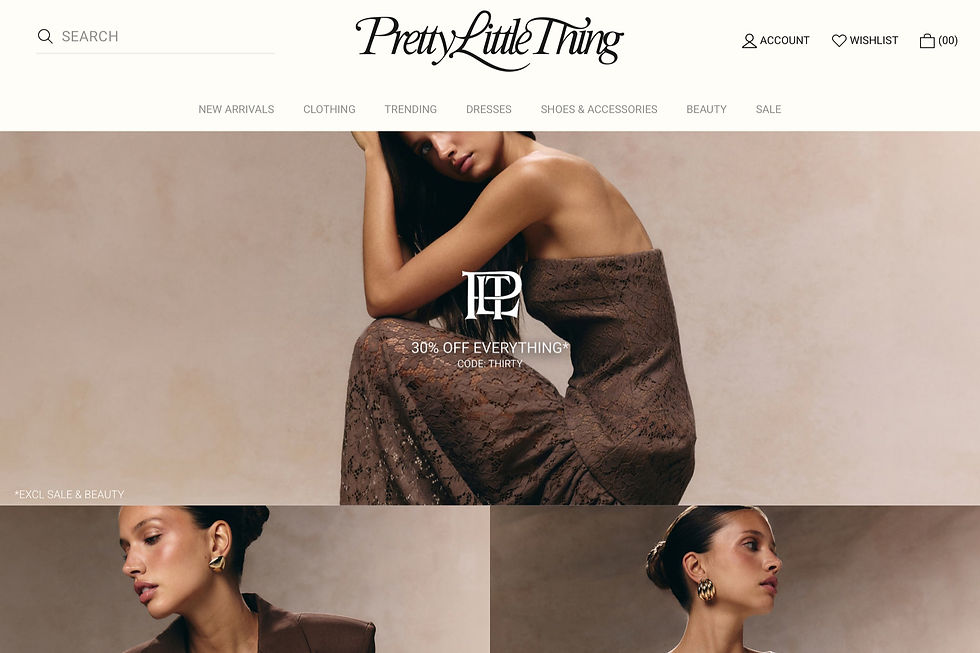
Fast fashion giant, Pretty Little Thing, unveils their unexpected rebranding, burying their pink BBL* party wear for muted, (significantly more expensive), workwear-inspired looks that spark controversy and concerns through the fashion sphere.
With the Pretty Little Thing controversial brown workwear-inspired rebrand that had eyebrows raised all over the Internet last week, we can no longer ignore the rippling effect of the looming recession that clouds over the world, so much so that it shows in the current fashion trends. A few short years ago during the pandemic and until the past year, the fashion landscape was dominated by a myriad of ultra-colourful and fun fashion trends with silly names like ‘tomato-girl’, ‘Barbie core’, ‘fairy-core’, ‘cottage-core’, ‘mermaid-core’ and so many more, we now find ourselves close to reliving the 2010s ‘business casual’ epidemic and wearing workwear to the club.
Through the rise of new fashion trends centred around the workwear theme, we have seen the rise of the ‘office siren’, ‘corporate core’, ‘old money aesthetic’ and ‘quiet luxury’ dominating the fashion landscape. No more colours, money pieces, frills and bows, now we wear grey and beige and sport ‘clean girl’ makeup. But this shift truly indicates a sartorial representation of a looming recession and the rise of conservative values creeping around every corner of our world. With the rising cost of living and unemployment rates, conservatism has taken centre stage, with more and more young people turning to right-wing ideologies and traditional values. And social media is incredibly good at aestheticising the living hell out of anything to sell you an ideal, so we find ourselves buying the ideal of a stable corporate job or the joys of an impossibly stylish and put-together stay-at-home mother through our fashion choices. In the process, we're deluding ourselves into pretending that if we look the part, one day we’ll ‘live the life’.

We’ve seen conservative values seep through our algorithms with increasingly more popular trad-wife content like Hannah Neelman’s (@ballerinafarm) or Nara Smith, and we’ve seen the quiet luxury and old money aesthetic rise to popularity through Sofia Richie’s style, and we’ve been seeing body ideals regress back to thinness solidified by the rumours surrounding the Kardashian ‘getting rid’ if their
BBLs but these trends have broken through past the social media sphere and into the mainstream through fashion. The epitome of this is perfectly exemplified by Pretty Little Thing’s rebrand.
© Pretty Little Thing
With pollution giant Shein creating a fast-fashion monopoly, once thriving fast-fashion brands like Pretty Little Thing (PLT) and Boohoo, amongst others, have seen their profits decline as they can’t compete with Shein’s turnaround and alarmingly low-priced pieces. So, what PLT decided to do instead was to rebrand itself as a high(er)-end retailer by replacing its sexy party-girl, BBL-friendly aesthetic with a clean-line, workwear-inspired collection that was eerily void of any colour, size inclusivity and real diversity, sporting the values of a true conservative brand.
Before:

© Buzzfeed
After:

© Pretty Little Thing
With this new rebrand came a review of PLT’s prices as well, misguidedly believing the new polished aesthetic of their line would justify their higher price tag whilst doing absolutely nothing to ensure their clothes reflected this through better and more sustainable materials or quality or better manufacturing practices (to clarify, most of PLT's garments are made exclusively from polyester). The brand’s comment section on Instagram is full of disappointed customers pointing out the hypocrisy of this “rebrand”, giving hope that consumers may finally start voting with their feet. I guess we’ll have to wait and find out how PLT's profits develop during the new financial year.
© PLT via Instagram
Another notable difference we see reflected in PLT’s new branding is the thinness of it all. At their forefront, fast-fashion brands had one thing going for them that luxury brands have yet to catch up on: size inclusivity. Yet in this new campaign, there is no size diversity between the models. This shift draws again on the ideology of conservatism, which is exclusive by design, and seeks to conserve traditional ideas, especially around women’s bodies. It’s no secret that the thin body type has dominated beauty standards decade after decade in many forms, and it’s no surprise that it comes back around at a time when conservative values are making a comeback. According to the Journal of Applied Social Psychology’s 1990 study, ‘prejudice against fat people may be another manifestation of a collection of political and social attitudes predicated on conventionalism and a narrow latitude of acceptance of others’ behaviours.’ Not only that, in Naomi Wolf’s words in ‘The Beauty Myth’, “A culture fixated on female thinness is not an obsession about female beauty, but an obsession about female obedience. Dieting is the most potent political sedative in women’s history; a quietly mad population is a tractable one.” Beware, dear readers, no trend is ever innocent and non-consequential, and the shift away from body positivity an,d to a certain extent, sex positivity as well, is not a coincidence.
Here are the first results that pop up on Pretty Little Thing’s website when typing ‘plus size’, the message is loud and clear:

© Pretty Little Thing
So, by following the trend of conservatism, the brand that was known to cater to the curvy body ideal of the 2010s is now inadvertently pushing the conservative agenda further by rebranding itself to, with dollar signs in their eyes, blindly follow what is trendy, proving that there is no real ethos of any kind behind fast fashion. You’re not buying into something you believe, because the brand you’re buying from doesn’t believe in anything. PLT’s new higher price tags, combined with its less inclusive and more conservative campaign, show us the brand’s aspiration to be like high fashion brands that refuse to cater to larger bodies and continue to uphold the thinness ideal to maintain their exclusivity. In effect, they’re saying, ‘If you’re not rich and thin, we are not for you’.
Now, no one is going to be branded conservative for wearing Pretty Little Thing’s new collection, and there is no shame in liking their clothes and style. After all, it is not our fashion choices that determine our socio-political beliefs, but I do believe that fashion brands have more power than they realise when it comes to pushing political ideas, but a money-driven company is never going to care about its messaging, as long as the bottom line remains its profits.
However, I do want to invite more of us to be more media literate and always search for the meaning behind trends instead of blindly following them. In our increasingly lonelier societies, we must find community and a style that defines us, but defining ourselves is exactly why we must look beyond the visual component of aesthetics and find a meaning that suits our beliefs behind the way we dress. Personal style is dying because of our need to conform to different aesthetics prescribed by an industry that doesn’t care about us. That creates polarisation, and I want to remind our readers to take back their free will, and find togetherness and belonging in communities that are rooted in their real beliefs.


Comments